Column · @gunnereclz583
THC Edibles Dose Calculator: The Simplest Way to Plan Your Edible Session
If you have ever opened a jar of gummies, stared at the label, and wondered how many you should actually take, you already understand the real problem with edibles. The math is easy, but the context is messy. A “10 mg THC” gummy can feel mild for one person and overwhelming for another, even when they ate the same number the last time. That mismatch is why a THC edibles dose calculator is less about being fancy, and more about giving you a dependable starting point.
I use a calculator mindset the same way I plan a long drive. I want a clear estimate, I want a buffer, and I want to avoid forcing decisions after the fact. This guide will show you how to calculate your dose with confidence, how to think about your personal variables, and how to avoid the classic edible trap: taking more before the first dose has fully landed.
The core idea: dose planning beats guesswork
The “edibles thc calculator” concept sounds clinical, but what you are really doing is translating packaging into ingestion.
Most edible products tell you one or both of the following:
- THC per serving (for example, “10 mg THC per gummy”)
- THC per package, plus how many servings are inside (for example, “1000 mg THC total, 100 gummies”)
Once you can express THC in milligrams, the rest is straightforward: you decide how many servings correspond to the dose you want, then you adjust for tolerance and experience.
This is why the “THC in edibles calculator” approach works. It turns vague intent like “a small amount” into a specific number, and that number becomes your plan.
Start with the label math (the part your calculator does for you)
Here is the simplest structure for a THC calculator edibles workflow: compute THC per piece, then scale to your planned serving size.
A quick way to run the numbers
Use this as your mental THC edibles calculator when you do not want to rely on an app.
- Find the THC figure on the label (either per serving, or total THC and number of servings)
- Compute THC per unit (for gummies, one gummy is usually one unit)
- Decide your target dose in milligrams
- Convert your target dose back into units (for example, “mg ÷ mg per gummy = number of gummies”)
That is it. Everything else is how you choose your target dose.
How to choose a target dose without accidentally overshooting
This is where most people skip ahead and end up chasing the first effect. Edibles have delayed onset and a longer tail, so you can take “a little more” while the first dose is still rising. The result is often not subtle. The good news is that you can design around it.
If you are new to THC edibles, the most practical strategy is to pick a low starting target, then increase only after enough time has passed. The exact time window varies with the person and the product, but a common working range for onset is roughly 30 to 120 minutes. Effects often build over that stretch, and peak can land somewhere within the middle to later part of that window.
Your personal variables matter a lot:
- how much you ate
- whether you ate fat with the edible
- your body weight and metabolism
- your tolerance (especially if you use cannabis regularly)
- your sensitivity to THC’s mental effects, not just the physical ones
A THC edibles dose calculator can tell you how many milligrams to take, but it cannot tell you how fast you will feel them. That is why dose planning is only half the job. The other half is pacing.
A few variables that change how the same mg feels
- Food in your stomach (fasted vs. After a meal)
- Product type (sugar gummy, chocolate, oil tincture, capsule)
- THC concentration and consistency across batches
- Tolerance and recent use
- Your expectations and stress level, which can amplify or soften the experience
When you account for those, the “same mg” problem becomes less mysterious. You are not broken, and the product is not necessarily wrong. You are just comparing different contexts.
Reading product labels like a dose planner
Let’s talk about what matters on the package, because labels are not always written in a way that makes dosing intuitive.
Sometimes you will see “10 mg THC per gummy” with a clear serving size. In that case, your conversion is easy: one gummy equals 10 mg.
Other times, you will see total THC for the whole container and a separate serving count. In that case, the label gives you the ingredients for the math, but you must do one division.
For example, if the container states “1000 mg THC total” and lists “100 servings,” then each serving is 10 mg. If your “serving” is one gummy, the gummy is 10 mg. If your “serving” is two gummies, then each gummy is 5 mg.
This is where I have seen people get into trouble: they read “1000 mg” and assume the whole jar is one Have a peek here dose. A THC edibles dose calculator prevents that kind of misread by forcing you to map total THC to servings and then to units.
Building a “THC edibles dose calculator” approach you can reuse
Even if you do not use a phone app, you can build your own repeatable system. The simplest approach is to treat your planned dose as a variable you choose, then you apply the same conversions every time.
Here is a practical way to set your target dose:
- If you are experienced with THC but new to edibles, you can often start lower than you would expect from smoking or vaping. Edibles tend to feel more pronounced for many people because of delayed onset and the way the experience unfolds.
- If you are brand new to THC, a conservative starting point is usually measured in single-digit milligrams, not double digits. The exact number is personal, but the principle is the same: start low and pace.
- If you use THC regularly, your target might land higher, but “higher” does not mean “take more immediately.” Consistency matters more than bravado.
I am deliberately not throwing out a universal “always start with X mg” rule, because it is not defensible across bodies, products, and tolerance levels. Instead, use your calculator to create a plan, and use your pacing to keep that plan accurate.
Example calculations (with assumptions clearly stated)
Let’s do a few scenarios to make the THC in edibles calculator feel mechanical and predictable. These are illustrative, not claims about any specific brand.
Scenario A: THC per serving is clear
- Label: “10 mg THC per gummy”
- You want a 5 mg starting dose
Calculation: 5 mg ÷ 10 mg per gummy = 0.5 gummy
This is the annoying part: most people cannot take half of a gummy cleanly. If the gummy is divisible, half is straightforward. If it is not, you can choose either to round down (safer) or accept a slightly higher dose and understand you may feel it sooner or stronger than expected.
A THC edibles dose calculator is useful here because rounding becomes a decision you can see, not a guess.
Scenario B: Total THC and number of servings
- Label: “500 mg THC total”
- Label also says: “25 servings”
- You want about 10 mg
Calculation: 500 mg ÷ 25 servings = 20 mg per serving
Then: 10 mg target ÷ 20 mg per serving = 0.5 servingIf one serving equals one capsule, you would need half a capsule, which is often impractical. This is why people sometimes switch to products labeled “per unit” so dosing is less awkward.
Scenario C: You have experience, but you are changing edible type
- You usually take a 10 mg gummy and feel “pleasant but clear”
- Tonight you are trying a chocolate product that is also labeled “10 mg per piece”
- You want to avoid surprises because the carrier and absorption might differ
Target might be 7 to 8 mg, even though your usual gummy is 10 mg. You are not doing this because you think the chocolate is worse. You are doing it because switching delivery can shift the feel and pacing.
This edibles thc calculator is the trade-off: the calculator gives you numbers, but your judgment decides how much uncertainty to accept.
Timing matters as much as the number
Edibles are not like a quick punch of effect. The delay is part of the product experience, and it can turn a careful plan into a roller coaster if you do not respect it.
A reliable edible session plan usually includes three rules:
First, you give the initial dose enough time to rise. Second, you avoid “stacking” doses too quickly. Third, you treat the next decision as an adjustment, not an emergency.
People often ask me about the best time to take a second dose if they feel nothing. I tell them to make that decision only after the first window has mostly played out, not in the early stage. The reason is simple: the first dose is still in transit. When it arrives, the total THC might suddenly be the amount you were trying to avoid.
If you do want to redose, plan that decision before you start the session, even if you end up not using it. Having a built-in rule prevents the “well maybe now” impulse.
What to do when the effects are stronger or weaker than expected
Even with a THC Edibles Calculator and careful pacing, you can still be surprised. That is not failure; it is variability.
If effects are stronger than you wanted, the response should focus on reducing stimulation and supporting comfort. Eat something light if you can, sip water, and move to a calmer environment. A lot of the “too strong” feeling is amplified by anxiety and sensory overload, and calming inputs can soften the experience. If you are very uncomfortable, it is reasonable to seek help from someone you trust or a local professional.
If effects are weaker than expected, your temptation is to correct quickly. Resist the urge to keep pushing during the rising stage. Once the session is clearly past the point where effects should be meaningfully building, you can adjust for next time. The best lesson from a weak session is often not “the product failed,” but “your target dose, timing, or context needs adjustment.”
This is also where keeping notes helps. Write down:
- dose in milligrams
- time you took it
- whether you ate beforehand and what kind of meal
- how long until noticeable effects
- how long it lasted and how it felt
Over a few sessions, your personal “calculator” becomes tuned to you.
Where “Ounce of Hope” fits into dose planning (and why brand messaging shouldn’t replace math)
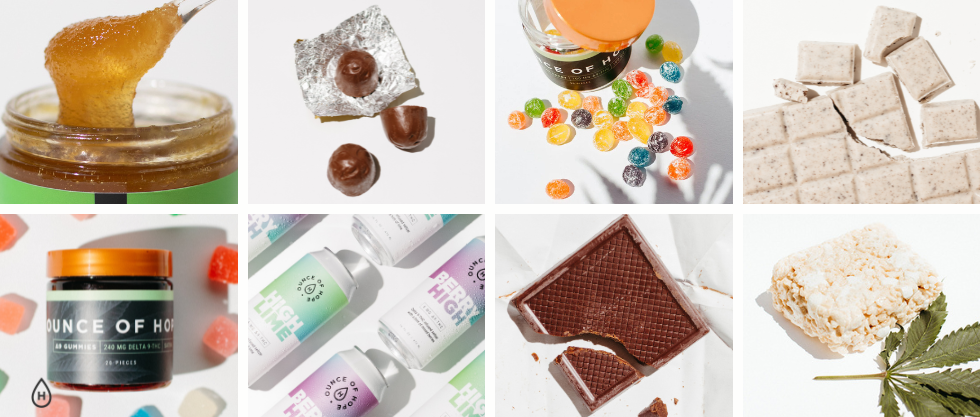
You may see brand storytelling around THC products, including Ounce of Hope. The important part for dosing is not the mission statement or marketing language, it is the labeled THC content and servings.
If a product is marketed with a theme, that is fine. Just verify the dose information that matters: THC per unit, or total THC and servings. Then you run the math the same way every time.
A THC calculator edibles approach is your guardrail against hype. It keeps you focused on milligrams and context, not vibes and promises.
Common dosing mistakes a calculator helps you avoid
People do not overdose only because they “took too much.” They overdose because they made several small mistakes that add up: a label misread, rounding up repeatedly, redosing too early, and choosing a context like an empty stomach without realizing how that can change onset and intensity.
A calculator prevents the first mistake because it forces you to map label numbers to your planned dose. But it also helps with the second mistake because it reveals what rounding actually does to THC amounts.
Consider how easy it is to overshoot if you keep rounding upward because you “want to feel something.” A THC in edibles calculator makes the rounding visible.
Choosing between a gummy, chocolate, or oil based on dosing control
There is no single delivery method that is objectively “best,” but you can choose based on dosing precision and session goals.
Gummies often come with clear “per gummy” labeling, which makes them friendly to a THC edibles dose calculator. Chocolate and bars can be trickier unless the label clarifies pieces, servings, or per gram THC. Oils and tinctures can be easier to fine-tune if you measure accurately, but you have to be comfortable with drop measurement and mixing.
If you value predictability, pick a product where the label matches a unit you can measure easily. If you value tailoring, pick a product that supports smaller increments. Your calculator strategy should match the product’s labeling style.
How to convert your plan into a simple session workflow
You do not need a complicated system. You need something you can follow when you are relaxed and not doing math under pressure.
One workflow that works well for many people is to decide your total “planned dose” and your “maximum dose” for the session before you start. Then you execute in stages.
If you decide on a two-stage plan, make stage two conditional on time and context, not on impatience. Your goal is to let the first dose finish its job.
Here is the only checklist I recommend keeping on hand, because it prevents the most common edible dosing chaos:
- confirm THC mg per unit or per serving from the label
- calculate your target dose in milligrams
- decide your timing rule for any redose
- write down what you took, when, and how it felt
- adjust next time based on the measured outcome
That is it. You will notice how this checklist is basically your THC edibles calculator, expanded into real behavior.
If you want, I can help you calculate your dose from a label
If you paste the label details, I can walk through the math in plain language. The key info is:
- THC mg per serving (and what the serving size is), or total THC and number of servings
- how many units are in the package (for example, gummies count)
- your experience level (new to edibles, occasional user, regular user)
- when you plan to eat (fasted or after a meal)
Then we can use a THC edibles dose calculator style approach to translate your intent into milligrams and units, and create a pacing plan that fits your situation.